
Electrician Warns UK Landlords: A Plastic Fuse Box Does Not Automatically Need Replacing After an EICR
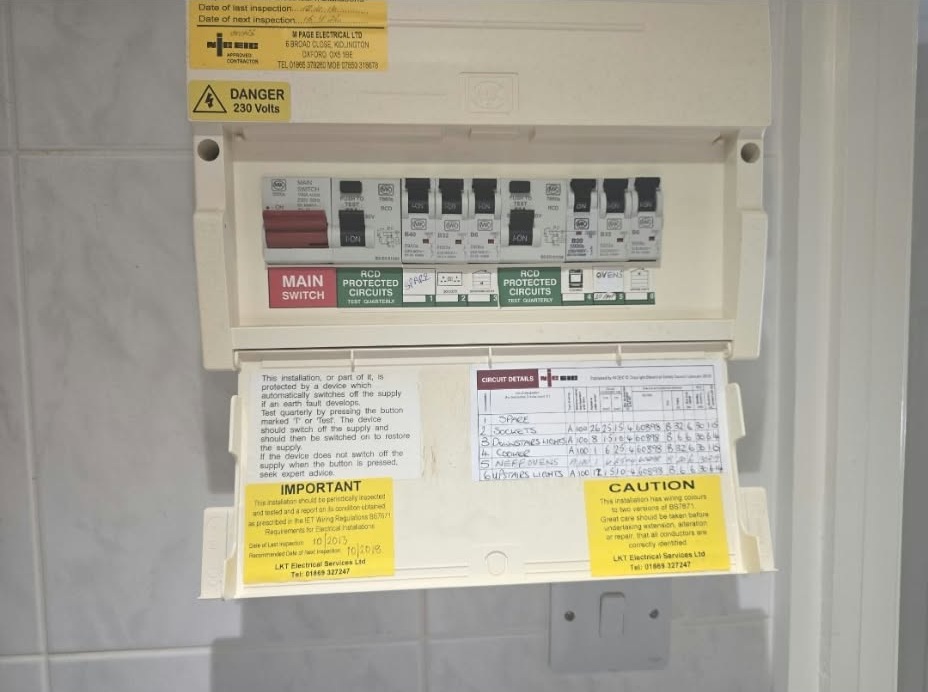
England Landlords Warned: A Plastic Fuse Box Does Not Automatically Fail an EICR
England landlords are being encouraged to check the reasons behind recommendations to replace older plastic fuse boxes, as electrical safety guidance confirms that plastic consumer units do not automatically make an EICR unsatisfactory.
Many landlords believe that an older plastic consumer unit must be replaced with a metal one to obtain a satisfactory Electrical Installation Condition Report (EICR).
However, this is not necessarily the case.
The Institution of Engineering and Technology (IET) has addressed this misconception in its official guidance on EICR myths.
Does a plastic fuse box fail an EICR?
No. A plastic consumer unit does not automatically fail an EICR simply because its enclosure is made from plastic.
Modern domestic consumer units are generally required to have non-combustible enclosures, but this requirement does not automatically mean every existing plastic consumer unit must be replaced.
The condition, location and safety of the installation must be assessed.
When can a plastic consumer unit receive a C3?
Electrical Safety First’s Best Practice Guide 4 recommends a C3 classification where a plastic consumer unit, not enclosed within a suitable non-combustible enclosure, is located:
- Under a wooden staircase.
- Within the sole escape route from the premises.
C3 means improvement recommended. A C3 observation alone does not make an EICR unsatisfactory.
Where the plastic consumer unit is not in either of these locations and has no other relevant defects, its plastic construction alone does not warrant a classification code.
When might a consumer unit actually need replacing?
Replacement may be necessary or advisable where there are genuine safety concerns, including:
- Signs of overheating, burning or heat damage.
- Dangerous or deteriorated electrical connections.
- Exposed live parts or damaged enclosure components.
- Inadequate protective devices or other defects that cannot be appropriately remedied without replacement.
- Other installation conditions that make continued use unsafe.
The appropriate remedial work depends on the findings of a competent electrical inspector.
Why landlords should understand C2 and C3
A C2 classification means potentially dangerous and requires remedial action.
A C3 classification means improvement recommended and does not, on its own, require remedial work for a satisfactory EICR.
For example, a plastic consumer unit located within the sole escape route may receive a C3 recommendation, but this does not automatically require the landlord to replace the entire unit to obtain a satisfactory report.
Landlords should ask their electrician to explain the specific defect and classification before approving major replacement work.
Watford electrician encourages transparent EICR reporting
George, an electrician with approximately ten years of experience, explains:
“Electrical safety must always come first. But landlords should not be told that a plastic fuse box automatically needs replacing simply because it is plastic.
“If there are dangerous connections, overheating or other genuine safety problems, those must be addressed.
“However, if the consumer unit is in suitable condition and the only concern is the plastic enclosure, this alone does not automatically justify an unsatisfactory EICR.
“Landlords should receive a clear explanation of any defects and understand which work is necessary and which improvements are optional.”
Five questions England landlords should ask
Before agreeing to replace a consumer unit, landlords should ask:
- What specific defect has been identified?
- What EICR classification code has been assigned?
- Is the replacement mandatory to address a safety issue or simply recommended?
- Can the defect be safely repaired without replacing the whole consumer unit?
- What official electrical safety guidance supports the recommendation?
EICR inspections in Watford
EICR Certificate Watford provides information about electrical inspection and testing services for landlords and property owners in Watford and surrounding areas.
Landlords seeking an electrical inspection can visit:
https://eicrcertificatewatford.co.uk/
Technical references
- IET: EICR Myths — https://electrical.theiet.org/wiring-matters/years/2021/85-may-2021/eicr-myths/
- Electrical Safety First: Best Practice Guide 4 — https://www.electricalsafetyfirst.org.uk/resources-for-electricians/best-practice-guides/
- GOV.UK: Electrical safety standards in the private and social rented sectors — https://www.gov.uk/government/publications/electrical-safety-standards-in-the-private-and-social-rented-sectors-guidance
This article provides general information and does not replace a property-specific electrical inspection.